
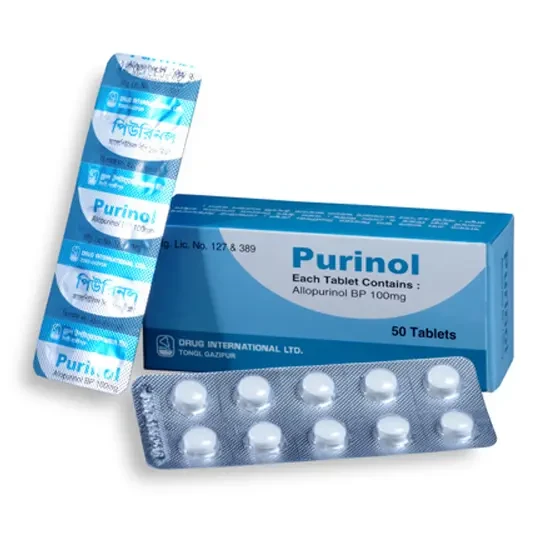
Purinol 100mg
৳ 4
Contraindications
Allopurinol tablet is contra-indicated in patients with known hypersensitive to allopurinol.
Side Effects
Rashes, gastro intestinal disorder’s, rearly malaise, headache, vertigo, drowsiness, visual and test disturbances, hypertension, alopecia, hepatotoxicity, neuropathy, gynaeconastia and blood disorders.
Buy 15 products and get ৳ 20 discount
0 people are viewing this right now
Estimated Delivery : Up to 4 business days
Description
Indications
Purinol is indicated for reducing urate/uric acid formation in conditions where urate/uric acid deposition has already occurred (e.g. gouty arthritis, skin tophi, nephrolithiasis). Purinol is indicated for management of 2,8-dihydroxyadenine (2,8-DHA) renal stones related to deficient activity of adenine phospho ribosyltransferase. Purinol is indicated for the management of recurrent mixed calcium oxalate renal stones in the presence of hyperuricosuria, when fluid, dietary and similar measures have failed.
Pharmacology
Allopurinol is a xanthine oxidase inhibitor which is administered orally. It acts on purine catabolism without disrupting the biosynthesis of purines. It reduces the production of uric acid by inhibiting the biochemical reactions immediately preceding its formation. Allopurinol is a structural analogue of the natural purine base, hypoxanthine. It is an inhibitor of xanthine oxidase, the enzyme responsible for the conversion of hypoxanthine to xanthine and xanthine to uric acid, the end product of purine metabolism. Allopurinol is approximately 90% absorbed from the GI tract. Peak plasma levels generally occur at 1.5 hours to 4.5 hours. It has a plasma half life of about 1 to 2 hours. Approximately 20% of the ingested Allopurinol is excreted in the faeces.
Dosage & Administration
Adults: Allopurinol should be introduced at low dosage e.g. 100 mg/day to reduce the risk of adverse reactions and increased only if the serum urate response is unsatisfactory. Extra caution should be exercised if renal function is poor. The following dosage schedules are suggested:
- 100 to 200 mg daily in mild conditions,
- 300 to 600 mg daily in moderately severe conditions,
- 700 to 900 mg daily in severe conditions.
Children: Children under 15 years: 10 to 20 mg/kg body weight/day up to a maximum of 400 mg daily. Use in children is rarely indicated, except in malignant conditions (especially leukaemia) and certain enzyme disorders such as Lesch-Nyhan syndrome.
Elderly: In the absence of specific data, the lowest dosage which produces satisfactory urate reduction should be used.
Dosage in renal impairment: In severe renal insufficiency, it may be advisable to use less than 100 mg per day or to use single doses of 100mg at longer intervals than one day.
Interaction
When 6-mercaptopurine or azathioprine is given concurrently with Purinol, only one-quarter of the usual dose of 6- mercaptopurine or azathioprine should be given because inhibition of xanthine oxidase will prolong their activity. Evidence suggests that the plasma half-life of vidarabine is increased in the presence of Purinol. When the two products are used concomitantly extra vigilance is necessary, to recognise enhanced toxic effects. Theophylline levels should be monitored in patients starting or increasing Purinol therapy. An increase in frequency of skin rash has been reported among patients receiving ampicillin or amoxicillin concurrently with Purinol compared to patients who are not receiving both drugs. Reports suggest that the plasma concentration of ciclosporin may be increased during concomitant treatment with Purinol.


Reviews
There are no reviews yet.