
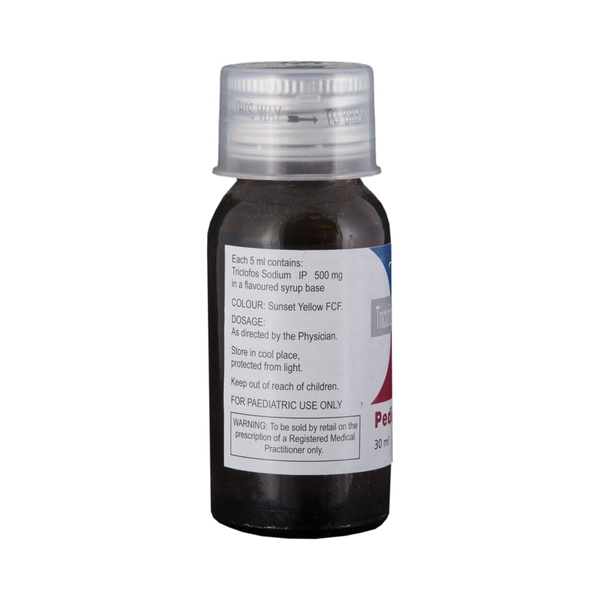
Pediclor Syrup 143.3 mg/5 ml
৳ 200
Storage Conditions
Buy 15 products and get ৳ 20 discount
Description
Pharmacology
Dosage & Administration
Adults: The usual dose is 430-860 mg (15-30 ml of the 143 mg/5 ml strength). Higher doses should not exceed a maximum of 2 g chloral hydrate (70 ml of the 143 mg/5ml strength) per dose.
Elderly: Dosage as for adults, except for the frail elderly or those with hepatic impairment where a reduction in dose may be appropriate (see section 4.4).
Children 12 years and over: The usual dose is 430-860 mg (15-30 ml of the 143 mg/5 ml strength). Higher doses should not exceed a maximum of 2 g chloral hydrate (70 ml of the 143 mg/5 ml strength) per dose.
Children (between 2 and 11 years): 30-50 mg/kg (1-1.75 ml/kg of the 143 mg/5 ml strength) of bodyweight. The dose should not exceed 1 g chloral hydrate (35 ml of the 143 mg/5 ml strength) per dose.
Children under 2 years: Chloral hydrate should not be used because the safety and efficacy of chloral hydrate in children aged under 2 years has not been established.
Contraindications
- Hypersensitivity to chloral hydrate or to any of the excipients
- In patients with severe hepatic impairment
- In patients with severe renal impairment
- In patients with severe cardiac disease
- In patients with active gastritis, oesophagitis, gastric or duodenal ulcers or perforation
- In patients susceptible to acute attacks of porphyria
Pregnancy & Lactation
Breast Feeding: Low levels of chloral hydrate have been found in breast milk. Although breastfeeding infants may be sedated by chloral hydrate in breast milk, the highest concentration measured in the milk (about 15 µg/ml) was considerably lower than that which would be measured in blood at a clinically active dose (100 µg/ml).
Precautions & Warnings
Gastrointestinal disorders: Pediclor should be used with caution in patients with history of gastritis, oesophagitis, gastric or duodenal ulceration or perforation. Pediclor is contraindicated in patients with active gastritis, oesophagitis, gastric or duodenal ulcers or perforation.
Hepatic and renal impairment: Pediclor should be used with caution in patients with mild to moderate hepatic and renal impairment and is contraindicated in patients with severe hepatic and renal impairment.
Elderly patients: Elderly patients are more likely to experience the undesirable effects of hypnotics such as ataxia and confusion which may lead to falls and injury. For use in the frail elderly, it is recommended that the lowest effective dose be administered.
QT prolongation: Pediclor should be used with caution and particular care in patients with low potassium levels, bradyarrhythmia, congenital long QT syndrome and other heart disorders (especially arrhythmia).
Pediatric population: Due to immaturity of hepatic metabolism in neonates and children <2 years of age, there is a risk of extended half-life of Pediclor and an increased risk of undesirable effects.
Use in Special Populations
Renal impairment: Pediclor is contraindicated in patients with renal failure or severe renal impairment. Specific guidelines for dosage adjustments in mild and moderate renal impairment are not available; dose adjustments may be warranted.


Reviews
There are no reviews yet.