

3RD Cef 200mg
৳ 27
Quick Tips
- Your doctor has prescribed 3RD Cef 200 mg Tablet to cure your infection and improve your symptoms.
- Do not skip any doses and finish the full course of treatment even if you feel better. Stopping it early may make the infection harder to treat.
- Take it with food to avoid an upset stomach.
- Diarrhea may occur as a side effect but should stop when your course is complete. Inform your doctor if it does not stop or if you find blood in your stools.
- Avoid consuming alcohol while taking 3RD Cef 200 mg Tablet as it may cause increased side effects.
- Discontinue 3RD Cef 200 mg Tablet and inform your doctor immediately if you get a rash, itchy skin, swelling of face and mouth, or have difficulty in breathing.
Buy 15 products and get ৳ 20 discount
Description
Indications
Upper Respiratory Tract Infections (URTI): e.g. otitis media; and other URTI where the causative organism is known or suspected to be resistant to other commonly used antibiotics, or where treatment failure may carry significant risk. Lower Respiratory Tract Infections-e.g. bronchitis.
Urinary Tract Infections: e.g. cystitis, cystourethritis, pyelonephritis. Clinical efficacy has been demonstrated in infections caused by commonly occurring pathogens including Streptococcus pneumonia, Streptococcus pyogenes, Escherichia coli, Proteus mirabilis, Klebsiella species, Haemophilus influenzae (beta-lactamase positive and negative), Moraxella catarrhalis (beta-lactamase positive and negative) and Enterobacter species. 3RD Cef is highly stable in the presence of beta-lactamase enzymes.
Pharmacology
Dosage & Administration
Adults and children over 10 years: The recommended adult dosage is 200-400 mg daily according to the severity of the infection, given either as a single dose or in two divided doses.
Elderly: Elderly patients may be given the same dose as recommended for adults. Renal function should be assessed and dosage should be adjusted in severe renal impairment.
Children: The recommended dosage for children is 8 mg/kg/day administered as a single dose or in two divided doses. As a general guide for prescribing in children the following daily doses in terms of volume of suspension are suggested:
- 6 months up to 1 year: 3.75 ml daily
- Children 1-4 years: 5 ml daily
- Children 5-10 years: 10 ml daily
In typhoid: the recommended children dose is 5 mg/kg body weight twice daily for 10-14 days.
Children weighing more than 50 kg or older than 10 years: Should be treated with the recommended adult dose 200-400 mg daily depending on the severity of infection.
Children aged less than 6 months: The safety and efficacy of Cefixime has not been established in children aged less than 6 months.
Dosage in Renal Impairment: Cefixime may be administered in the presence of impaired renal function. Normal dose and schedule may be given in patients with creatinine clearances of 20 ml/min or greater. In patients whose creatinine clearance is less than 20 ml/min, it is recommended that a dose of 200 mg once daily should not be exceeded. The dose and regimen for patients who are maintained on chronic ambulatory peritoneal dialysis or haemodialysis should follow the same recommendation as that for patients with creatinine clearances of less than 20 ml/min.
Interaction
Contraindications
Side Effects
Pregnancy & Lactation
Precautions & Warnings
Overdose Effects
Storage Conditions
Chemical Structure
| Molecular Formula : | C16H15N5O7S2 |
| Chemical Structure : | 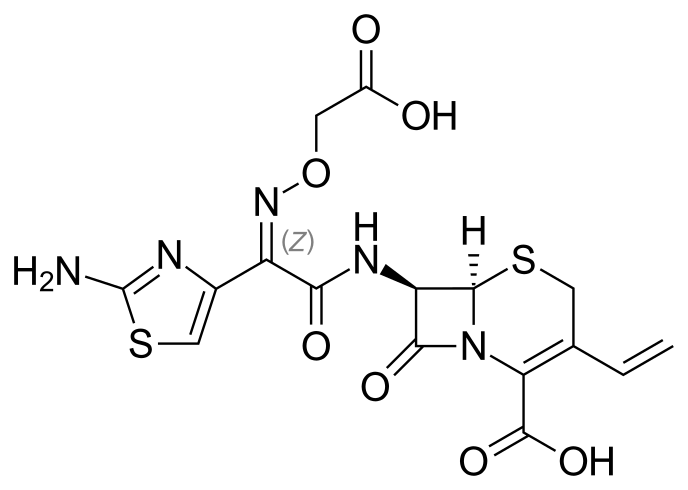 |


Reviews
There are no reviews yet.