
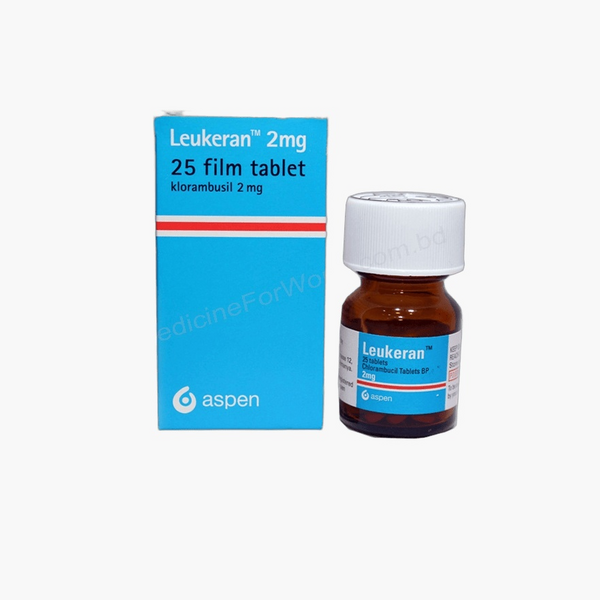
Leukeran 2mg
৳ 45
Therapeutic Class
Buy 15 products and get ৳ 20 discount
Description
Indications
Pharmacology
Chlorambucil produces its anti-cancer effects by interfering with DNA replication and damaging the DNA in a cell. The DNA damage induces cell cycle arrest and cellular apoptosis via the accumulation of cytosolic p53 and subsequent activation of Bax, an apoptosis promoter.
Chlorambucil alkylates and cross-links DNA during all phases of the cell cycle, inducing DNA damage via three different methods of covalent adduct generation with double-helical DNA:
- Attachment of alkyl groups to DNA bases, resulting in the DNA being fragmented by repair enzymes in their attempts to replace the alkylated bases, preventing DNA synthesis and RNA transcription from the affected DNA.
- DNA damage via the formation of cross-links which prevents DNA from being separated for synthesis or transcription.
- Induction of mispairing of the nucleotides leading to mutations.
The precise mechanisms by which Chlorambucil acts to kill tumor cells are not yet completely understood.
Dosage
Hodgkin’s disease: 200 mcg/kg/day for 4-8 wk.
Non-Hodgkin’s lymphoma: 100-200 mcg/kg/day for 4-8 wk. Maintenance: Reduced daily dosage of intermittent courses of treatment.
Chronic lymphocytic leukaemia: Initially, 150 mcg/kg/day until the total leukocyte count falls to 10,000 microliter. Treatment may be resumed 4 wk after at a dose of 100 mcg/kg/day.
Waldenstrom’s macroglobulinaemia: Starting dose of 6-12 mg daily until leucopenia occurs followed by 2-8 mg daily.


Reviews
There are no reviews yet.