
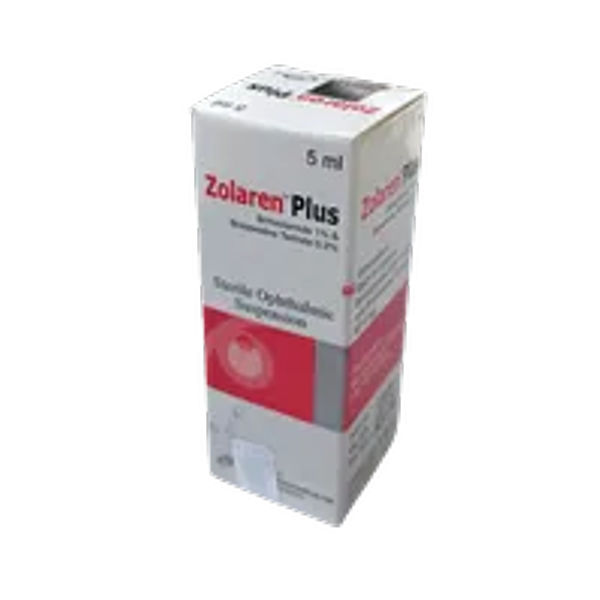
Zolaren Plus Ophthalmic Suspension
৳ 550
Therapeutic Class
Storage Conditions
Buy 15 products and get ৳ 20 discount
Description
Indications
Pharmacology
Brinzolamide (carbonic anhydrase inhibitor) and Brimonidine Tartrate (alpha 2 adrenergic receptor agonist). Each of these two components decreases elevated intraocular pressure. Elevated intraocular pressure is a major risk factor in the pathogenesis of optic nerve damage and glaucomatous visual field loss. Brinzolamide inhibits carbonic anhydrase in the ciliary processes of the eye to decrease aqueous humor secretion, presumably by slowing the formation of bicarbonate ions with subsequent reduction in sodium and fluid transport. Brinzolamide has a peak ocular hypotensive effect occurring at 2 to 3 hours post-dosing.
Fluorophotometric studies in animals and humans suggest that Brimonidine Tartrate has a dual mechanism of action by reducing aqueous humor production and increasing uveoscleral outflow. Brimonidine Tartrate has a peak ocular hypotensive effect occurring at two hours post-dosing. The result is a reduction in intraocular pressure (IOP).
Dosage & Administration
Interaction
Contraindications
Side Effects
The most frequently reported adverse reactions in patients treated with Benozol BR occurring in approximately 3 to 5% of patients were blurred vision, eye irritation, dysgeusia (bad taste), dry mouth, and eye allergy. Other adverse reactions that have been reported with the individual components during clinical trials are listed below.
Brinzolamide 1%: The most frequently reported adverse reactions reported with Brinzolamide in 5 to 10% of patients were blurred vision and bitter, sour or unusual taste. Adverse reactions occurring in 1 to 5% of patients were blepharitis, dermatitis, dry eye, foreign body sensation, headache, hyperemia, ocular discharge, ocular discomfort, ocular keratitis, ocular pain, ocular pruritus and rhinitis.
Brimonidine Tartrate 0.2%: Adverse reactions occurring with Brimonidine Tartrate in approximately 10 to
30% of the subjects, in descending order of incidence, included oral dryness, ocular hyperemia, burning and stinging, headache, blurring, foreign body sensation, fatigue/drowsiness, conjunctival follicles, ocular allergic reactions, and ocular pruritus.
Pregnancy & Lactation
Precautions & Warnings
Use in Special Populations
Use in Pediatrics: The individual component, Brinzolamide, has been studied in pediatric glaucoma patients 4 weeks to 5 years of age. The individual component, Brimonidine Tartrate, has been studied in pediatric patients 2 to 7 years old. Somnolence (50-83%) and decreased alertness was seen in patients 2 to 6 years old. Benozol BR is contraindicated in children under the age of 2 years
Use in Geriatrics: No overall differences in safety or effectiveness have been observed between elderly and adult patients.


Reviews
There are no reviews yet.